
Why emotional safety is the foundation that makes everything else possible, or impossible.
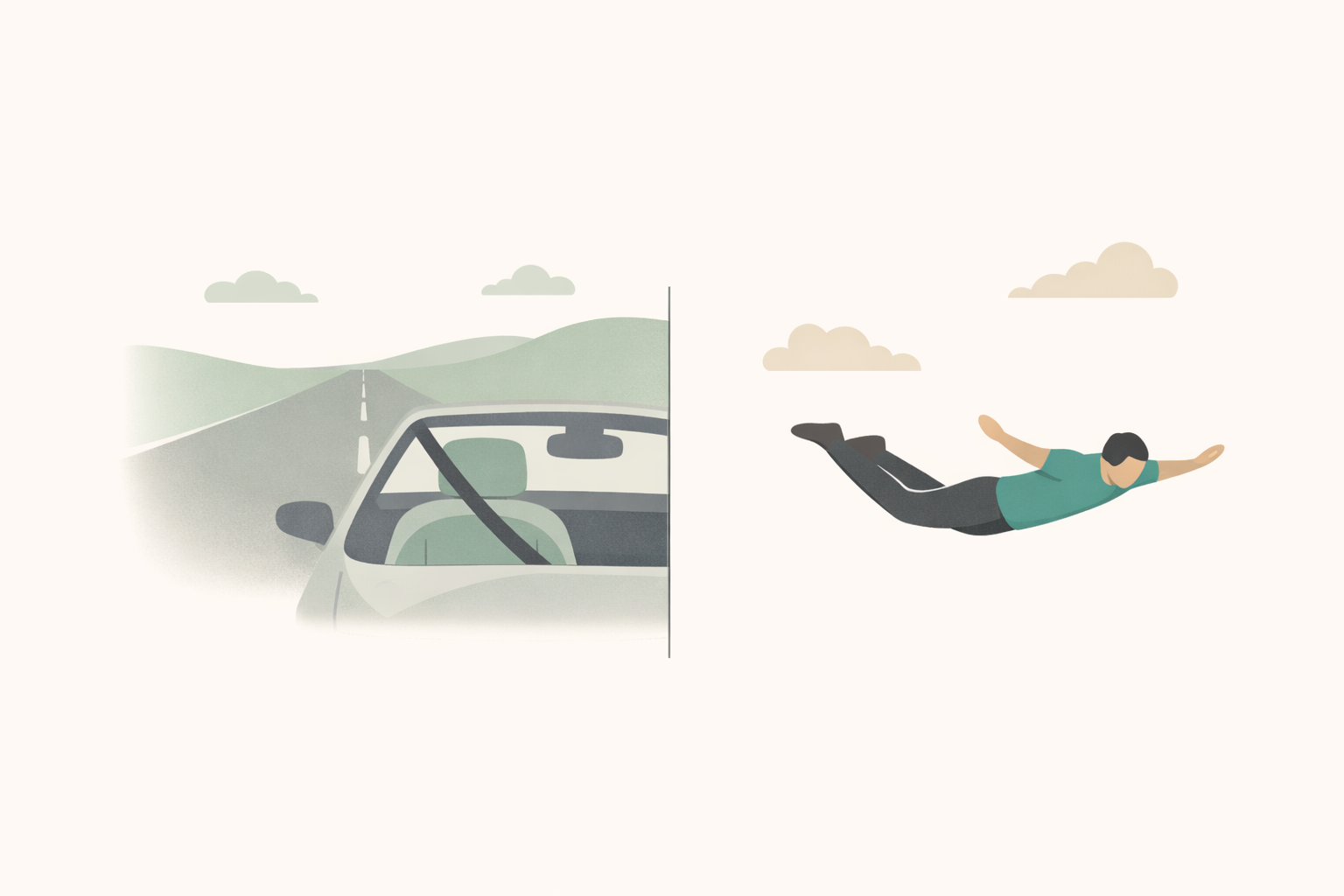
Emotional safety doesn’t stop impact — it prevents damage.
Emotional safety is the foundation that makes everything else possible—or impossible. Without it, love cannot sustain intimacy, conflict cannot lead to repair, and connection cannot deepen. Understanding safety as a structure, not just a feeling, helps you see what builds it and what erodes it.
Emotional safety is not the absence of conflict or discomfort. It's not constant reassurance or the feeling that nothing will ever hurt. Emotional safety is the reliable presence of qualities that allow vulnerability without collapse, conflict without destruction, and difference without threat.
Safety is what makes it possible to say hard things and be heard. To make mistakes and be met with repair instead of punishment. To have needs and express them without fear of rejection or retaliation. To be yourself without performance or withholding.
When emotional safety is present, relationships can handle stress, navigate conflict, and deepen through challenge. When it's absent, even small conflicts feel threatening, repair attempts fail, and distance becomes the only way to regulate.
Safety isn't built through grand gestures or promises. It's built through consistent, small actions that demonstrate reliability, empathy, non-defensiveness, and accountability. And it erodes not through dramatic betrayals but through accumulated small breaches: dismissiveness, defensiveness, contempt, withdrawal, inconsistency.
Here's what emotional safety requires:
Predictability: You can anticipate how your partner will respond under stress. Their reactions are consistent, not erratic. You don't have to manage them emotionally or walk on eggshells.
Reliability: They do what they say they'll do. Commitments are honored. Repair attempts are followed through. You can trust their words to match their actions over time.
Non-defensiveness: They can hear feedback, acknowledge impact, and respond with curiosity instead of counterattack or shutdown. Mistakes don't become battles.
Empathy: Your feelings are acknowledged and validated, even when your partner doesn't agree or share them. Your experience matters to them.
Repair capacity: When ruptures happen, repair follows—not perfectly, but consistently. Conflicts don't turn into cold wars or unsolvable battles.
Accountability: They take responsibility for their impact without collapsing into shame or deflecting into blame. "I hurt you" doesn't become "You made me" or "I'm the worst person ever."
Presence: They show up emotionally, not just physically. They're available for connection, not just logistics.
When these qualities are consistently present, safety builds. When they're inconsistently present or actively absent, safety erodes—even if love, attraction, and compatibility remain.
This is why relationships can feel loving and unsafe at the same time. Love is about care and connection; safety is about structure and reliability. You can have one without the other. But you cannot have sustainable intimacy without both.
Think of emotional safety as a stack—layers that build on each other. When lower layers are unstable, higher layers cannot hold.
Layer 1: Regulation (foundation)
Can you both regulate your own nervous systems under stress? If one person consistently dysregulates and expects the other to fix it, or if both escalate together, the foundation is compromised.
Layer 2: Repair (critical)
After conflict or disconnection, does repair happen reliably? Can you move from rupture to reconnection without punishment, withdrawal, or prolonged distance?
Layer 3: Boundaries (structure)
Can boundaries be stated and respected without retaliation, guilt, or collapse? Boundaries that feel threatening to one person destabilize safety for both.
Layer 4: Presence (connection)
Is emotional presence consistent? Not constant—but reliable. Can you count on your partner to show up emotionally when it matters?
Layer 5: Growth capacity (resilience)
Can the relationship handle increasing intimacy, challenge, and complexity? Does growth in one person threaten the other, or do you grow together?
When safety is intact at all layers, the relationship can handle almost anything. When safety is compromised at the lower layers, even small stressors feel unmanageable.
Safety doesn't usually disappear suddenly. It erodes gradually through patterns that go unaddressed:
Criticism that becomes character attacks
Feedback about behavior becomes judgments about identity. "You forgot to call" becomes "You're irresponsible" or "You don't care."
Defensiveness that blocks repair
Every attempt to raise an issue is met with justification, deflection, or counterattack. The message becomes: your hurt is less important than my defense.
Contempt
Sarcasm, mockery, eye-rolling, dismissiveness—these communicate: "You are beneath me." Contempt is the strongest predictor of relationship failure because it corrodes respect, which is foundational to safety.
Withdrawal and stonewalling
One person shuts down, goes silent, or disengages during conflict. This signals: "I'm not available for this," which leaves the other person alone in distress.
Inconsistency
Warmth one day, coldness the next. Available one week, withdrawn the next. Inconsistency makes it impossible to know what's safe to share or when to reach for connection.
Punishment after vulnerability
When someone shares something tender or difficult and is met with judgment, minimization, or later weaponization, they learn: don't be vulnerable here.
Unrepaired ruptures that accumulate
Small hurts that don't get acknowledged or repaired stack up. Over time, the weight becomes unbearable—not because any one hurt was catastrophic, but because none were addressed.
These patterns don't always look dramatic. They often look like everyday interactions. But when they become the norm, safety erodes until the relationship can no longer hold intimacy.
Safety doesn't mean perfection. It means repair is reliable, empathy is present, and accountability is normal.
Here's what it looks like in practice:
Building or rebuilding safety requires:
1. Self-regulation first
You cannot build safety if you cannot regulate yourself under stress. Learn to pause, breathe, and choose response over reaction.
2. Acknowledge impact without defensiveness
When your partner says "That hurt," your response matters more than your intention. "I didn't mean to" is not repair—it's defense. Try: "I hear you. I'm sorry. What do you need?"
3. Make repair attempts explicit and consistent
Don't wait for hurt to dissolve on its own. Repair actively and follow through. Small, consistent repair builds more safety than grand gestures.
4. Track patterns, not just events
Notice whether safety is building or eroding over time. One bad conflict doesn't break safety; a pattern of unrepaired conflicts does.
5. Practice empathy before problem-solving
Before you fix, explain, or defend—acknowledge. "That sounds really hard" builds more safety than "Here's what you should do."
6. Address erosion early
Don't wait until safety is gone to talk about it. Notice when criticism increases, repair decreases, or distance becomes comfortable. Name it while it's still addressable.
7. Respect boundaries as information, not rejection
When your partner sets a boundary, receive it as care for the relationship, not a personal attack. Boundaries protect connection; violations erode safety.
8. Rebuild through consistency, not promises
Safety is rebuilt through reliable actions over time, not apologies or reassurances. Show up consistently, repair reliably, and let time do the rest.
If you feel emotionally flooded: read Signals & Misreads next.
If you feel stuck and urgent: do one exercise from Exercises next.
If you want a clear signal of what's driving your patterns right now, take the Pulse.